
SHORT STORY
IT RAINED THAT NIGHT
by SP Singh

Their journeys had come to a halt at a ghostly station from where both, after seven hours, were to catch the connecting trains to their different destinations. They were a woman and a man, who, after initial surprise and subsequent introduction, settled down, in an air of unease, into the waiting room. The station inspired little optimism during the day. In the night, it brought complete gloom. The stationmaster, who did almost every job except cleaning the tracks, a clerk did almost every work except typing the letters, a vendor who sold everything stale except tea and a coolie who carted around every load. Mostly the poor people alighted there.
When the coolie noticed a lady with some pretence of beauty, clad in a sari, get down from the train, his eyes lit up. He sensed a chance to make some money and rushed to her. She asked him to take her to the waiting room. An hour later, the next train brought a rich man whose luggage he brought to the same room. Two passengers in a single day were godsend. Both looked rich and their gestures promised him a good tip besides his charges. The prospect energised him and he rushed back to the vendor and brought them hot tea with less sugar and milk. He knew the rich people, unlike the poor, didn’t take their tea heavy with milk and sugar.
Through that godforsaken junction, only four trains, in twenty-four hours, passed. Two trains had just crossed the station, and the remaining two were due at five in the morning. It was eight p.m. The station staff was preparing to wind up. The stationmaster was the last person to leave after ensuring that everything was OK and the guard was on duty. His house, a government quarter, was located a few metres behind the station.
As he was taking a round of the station, he noticed that someone had left the lights of the waiting room on and so he walked towards it. He was surprised to find a couple there. The rare sight brought a smile to his lips.
“Can I do anything to make your stay comfortable?” he asked in humility, moving his hand over his pate. Your trains would arrive after five in the morning. I’d be here before that and wake you up. I can ask the vendor to stay in the night, if you want to have tea later? Everybody goes home after eight, as there’s no train until the next morning.”
“Thanks. We’ll manage,” the man replied. The woman looked on.
The stationmaster said goodnight to both and left.
“Nice gesture,” the woman said.
“Yeah,” added the man. “His situation is like that of a guy who has run short of food when some guests come unannounced.”
Thereafter, they fell silent. She went to the bathroom. He went to the platform to search for something to eat. In the stall, the newspapers and magazines caught his attention, but a close look at them disappointed him. The first was a week old and the second a month old. A middle-aged vendor with shabby hair and shabbier clothes greeted him with a grin, “Sahib, what do you want?”
“Anything fresh.”
“I’ve fresh eggs. I can prepare a tasty omelette, full of onion and tomato.”
“What about bread?”
“It’s two-day-old.”
“You could have said it’s fresh,” the man smiled.
“How could I?” the vendor replied. “I can’t pull a fast one on the city people. It works only on the poor folks who can’t read the date on the packet.”
The man picked up the bread and brought it closer to his nose. It smelled okay and was edible. Turning to the vendor, he said, “Warm four pieces of bread and make two omelettes. Bring two plates to the waiting room.”
The coolie said, “Right sahib, you go. I’ll bring it to you.”
The man left. The woman had freshened up, changed her clothes, redone her make-up and waited. When he entered the room, she gestured him to the bathroom. Half an hour later, he emerged out in new clothes. Both looked fresh and in the mood to talk. Until that moment, they had hardly spoken except knowing where they came from and where they were going.
“We’ll have to spend the night in this dingy place?” the man said in a disdainful voice.
“At least we have a roof over our heads.” the woman sounded more positive. “Things could have been worse.”
“Good, you see the positive in everything.”
“Yeah, I try to.”
“If I may ask, why are you travelling alone?” The man had concern in his voice.
“I believe some journeys are best undertaken alone. And this is one such occasion. I’m going to look up my ailing aunt who raised me, educated me and married me. My mother died because of leukaemia when I was six. I’ve hazy memories of my father.”
“Why? Where is he?”
“He died a year later in an accident.”
“I’m so sorry to hear that.”
“It’s been long, almost thirty years since that happened. I’m used to their loss. My tears have dried up. Over the years, the grief has also lessened.”
“I guess God snatches away the person He loves the most,” the man said in a philosophical tone.
“Yeah,” she sighed.
In walked the coolie and cut their talk short. Placing plates and mineral water on the table, he went back to get tea. Both pulled their chairs closer to the round table with the mica top. It was big enough for four people to dine at it. After placing the teacups, the coolie went out.
“Let’s have our frugal dinner,” the man smiled.
“The omelette tastes good. The tea is hot and refreshing,” she said after eating the first morsel and drinking the first sip.
Once they finished, he called out the coolie. Thunder rumbled in the distance. Lightning lit the veranda now and again. The tea seller walked over to the windows and said, closing them, “It’s going to rain tonight. If I don’t close them, the room will be flooded by midnight.”
After shutting the windows, he picked the plates and cups and said, “I’ll be back in the morning. I can stay at the station in the night if you want.”
“No, it’s okay,” the man replied, opening his purse.
“Don’t worry, sahib. I’ll take it in the morning.” He’d a close look at both of them before leaving.
The thought about them spending the night together troubled the coolie’s mind, but he shrugged it aside the next moment. They were in their late forties and at their age people played with their grandchildren and read the Ramayana. With greying hair and bulging bellies, both were too old to indulge in any adventure. They seemed like decent people. Satisfied, he started for home. The vendor, after closing the shop, joined the station master. Their talks revolved around the passengers until they reached home.
At the station, the lone guard stood on duty at one end. At the other end was the waiting room, where the couple’s presence gave him a sense of security and an excuse not to guard that section of the station.
In the room, the man stood up, bolted the door from inside and returned to the reclining chair, good enough for a catnap. The woman held a book in her hands, which she pretended to read.
“It’s a strange night,” the man said.
“Yeah,” she let out a deep sigh, “such nights in such places give us an opportunity to reflect on what we’ve lost in the past and what we can achieve in the future.”
“Yes,” he fell silent.
“You didn’t tell me the purpose of your visit,” she probed.
“Mine isn’t sentimental,” he replied. “I’m going to my wife’s native place to purchase a house. It’s her desire that we settle down there after retirement.”
“And what’s your desire?”
Quickness and content of the question unsettled him. He’d never thought about that. What was his choice? He didn’t know. What mattered was his wife’s choice. As he debated it in his mind, he heard her say sorry.
“No, you asked a valid question. Until now, I had not asked myself what I wanted. Perhaps it’s time for me to probe my heart,” he said, looking outside.
“Strange as it might sound, people who seldom bother to ask us about our feelings pull the strings of our lives. It’s their opinion that matters,” she said with a sigh.
It pushed him deeper into thought.
“I guess you’re right. We all carry a void in our hearts, hoping that someday someone special will fill it up with love. But love succeeds only for a while. Perhaps it has its limitations. Thereafter, the emptiness returns. I guess people are lonely in their own peculiar ways. You can share your life with someone, but it’s hard to share your loneliness.”
“Those who find fulfillment in love are lucky,” she said.
She was empty from within. Perhaps she was trying to lessen her loneliness by pouring her heart out to him. It indeed was a strange night, he thought.
“I guess people at our age feel the void because of the midlife crisis.”
“Love is everlasting. Why does it let such a thing exist, then?” she asked.
“I don’t know.” That question stumped him. “I’m yet to understand it fully.”
“Shouldn’t love give you hope? Shouldn’t it give you a zest for life?” she went on.
“Sure. It should,” he murmured.
“So, you believe giving somebody a gift of life isn’t a bad thing?”
“Why should it be?”
“Will you give me this gift?” she stared at him.
Her dark blue eyes carried the serenity of a mountain lake, and her heart carried the turbulence of an ocean. For a while, he tried to fathom the import of those words. When he understood it, he searched for a convincing answer.
“How can I? It would be a sin?” he argued.
“How can something that gives life to somebody be called a sin? Didn’t you say this a moment ago?”
“Hmm…,” he nodded.
“I’m childless. You can give a new meaning, a new purpose to my life. Until now I’ve lived a half-life. I want to live it to the fullest. Don’t let the fear of guilt cloud your decision,” her eyes misted as she spoke.
Her tears moved him.
In the morning, they were up early, got ready, packed their suitcases and waited for tea, which the coolie, wearing clean clothes, brought them after ten minutes. After she finished, the coolie carried her luggage onto the platform. He followed them.
“Memsahib, it rained last night. My father says the first rains are good for the crops. If a farmer even throws seeds into the soil, he’d get a bumper crop.”
“Hope your father’s words come true,” she smiled, handing him a five-hundred rupee note.
“But Memsahib, it’s too much,” the coolie objected.
“Keep it. It’s baksheesh.”
The coolie touched her feet in gratitude and carried her suitcase inside the coupe. The man gave her a warm handshake and, with a tinge of sadness in his voice, said goodbye to her. Minutes later, the train wheeled out of the platform. A half-hour later he also left. As the train whistled out of the station, she lifted the window and gazed at the sky. The dark clouds had thinned out, exposing vast blue tracts. The sun was rising, bringing hope to the millions. With her eyes shut, she lapsed into a long silence.
Connect with SP Singh on Facebook
Connect with SP Singh on X (former Twitter)
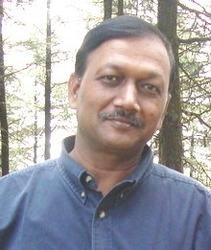
SP Singh, an army veteran, is a novelist, short story writer and painter. His debut novel, ‘Parrot under the Pine Tree’ was shortlisted for the Best Fiction Award at the Gurgaon Literary Festival and nominated at the Valley of Words Literary Festival in 2018. His short story, ‘Palak Dil,’ won the South Asian Award for Micro Fiction in 2019. His story, ‘The Broken Window’ has been published in UNSAID, An Asian Anthology by Penguin Random House SEA in 2022 and ‘Cherrapunji’ has been published in an anthology, ‘No One Should Kiss a Frog’.

Please don’t forget
to support the writer!
Tell us your thoughts
Share this page
Visit SP Singh
Choose Your Next Read
Author Spotlight:
Creative Non-Fiction by Evan Griffith
Author Spotlight:
Rant of Appreciation by Evan Griffith
Author Spotlight
Interview: Evan Griffith
Poetry:
My Poetic Soul
Poetry:
In the Thick of Life
Poetry:
Seasons of Gratitude and Hope
Poetry:
From the Depths of My Thoughts
Poetry:
The Rejected Soul
Poetry:
Dark Hours
Poetry:
The Nameless, Placeless
Poetry:
When the Rain Comes
Poetry:
In My Life
Poetry:
Winter is a Careful Nurse
Fiction:
It Rained That Night
Fiction:
Where Equality Reigned Supreme
Fiction:
Hazlitt and the Mobility Scooter
Fiction:
Slow Drip of Water
Fiction:
Gryphon Bay
Insights:
Almost Lost Forever: A True Story of Love and Survival
Insights:
Gratitude: A Work In Progress
Book Review:
In Search of a Salve: Memoir of a Sex Addict
Book Excerpt:
The Quantum Entanglement Party
A Writer’s Life:
John Steinbeck
Picture Prompt:
A Spectral Harmony
 Manic Sylph Writes... Poetry & Thoughts by Mona Soorma
That is a lovely story. From your name I thought you were Col SP Singh from Guards. The doubt was dispelled when I saw your photo.
Maj Gen VK Singh
LikeLike
Thank you so much sir. Very thoughtful of you to post your comment. Warm regards,
LikeLike
Thank you for your appreciation!
LikeLike