
SHORT STORY
EYES LIKE MINE
by Don J. Rath

His name was Joe Kelly, and I believe I was his oldest son.
I first met him two weeks after my mother Lauren’s funeral, a photo hidden in a cardboard box with a thick layer of dust on its creased lid, buried beneath other boxes with dusty lids. A tribute to the life Lauren had left behind on the last day of April 2000. She had written no books, broken no records for the backstroke, or won any awards since the ninth-grade math contest when she was named Best Girl, boasting a score of 98 to Bobby McAllister’s 100. Or so the torn certificate on top of Box 1 told me.
Box 17 used to be called “School Stuff,” or so the block letters scribbled on the side said. But now that my younger siblings had tasked me with going through all of Lauren’s things, I had developed my own system. I had boxes labelled 1 through 17, with box 17 being kept apart at the catwalk’s end. I had found it only because the 30-watt GE bulb at the far end of the crawl space miraculously still worked.
My father was buried in Box 17, and not next to my mother, who now rested in a well-manicured patch of green at Our Lady of Peace Cemetery, corner of St. Louis and St. Bartholomew, division 4-south.
I stared at the diploma for ten minutes. Lauren Cassie Marie West. Sacred Heart High School. In the year of our Lord, 15 June 1950. The thin plastic sheet over the certificate had yellowed, but the black and red ink was as clear and crisp as the day it was printed. I remembered seeing it only once before, the day I graduated from that same school, in the year of our Lord, 1975. She had held it next to mine, smiling, pointing out how the school’s insignia had changed, but the lettering was nearly the same. I don’t remember where my diploma is, or anything about the day I received it, only the year. It’s probably buried in another cardboard box in my ex-wife Allison’s basement, or in a pile of ashes in an incinerator somewhere. I should ask Allison the next time we have one of our annual five-minute conversations. For the record, she missed Lauren’s funeral; I needed to mention that to her.
Beneath the diploma was a mound of paper, useless crap Lauren had held onto but never looked at after she banished it to the attic. These included a short story about a Satanic cult that cleaned offices at night, an application essay submitted to colleges she never attended, and the award-winning Comprehensive Secondary School Mathematics Test Level IX, where she scored 98. There was also a poem titled “Spring” about spring, a dog-eared copy of The Outsiders, a penciled scrawl on its inside title page: I want to marry Sodapop Curtis. The things you fucking learn about your parents after they die.
But buried – or hidden? – under the stack of papers was a black-and-white photo of a man stepping out of a shower. At first, I thought it was a stock photo of young Marlon Brando, a still shot from a movie no one heard of anymore. But this was an amateur job. The wet hair was matted and uncombed, the dots of soap scattered over the man’s left arm and shoulder random and unprofessional, his eyebrows bushy and untrimmed, his nipple oversized and uncentered on his pectoral. He looked as if he was just about to scowl, his brow half-furrowed and tensed. Oh yeah, in the background were the faux marbled tiles of the shower. The same ones as in the shower in the bathroom of the house I’d grown up in.
And his eyes were mine.
Eyes exactly as Allison had always described mine. Almond-shaped, crossed, the irises like dried lima beans. And troubled. An adjective I never understood. Whose eyes can be described as troubled? The souls of devout Catholics were troubled. Poor people with pay-day loans were troubled. Lauren was troubled. But not eyes. I never knew what Ally meant until I saw that photo.
He was handsome. Not movie-star handsome like Brando. Not even literary handsome like Sodapop. Rugged, dirty-before-the-shower kind of handsome. He had the kind of muscular arms that come from lifting heavy boxes instead of weights. He had the kind of chafed neck that comes from using razor blades for too long instead of recovering from a sunburn earned on a beach in Mexico. He had the kind of hair-lined paunch that comes from a bowl and a half of Charlie’s Chips and six cans of Paps on a Sunday afternoon instead of haute cuisine.
The name Joe suited him. Joe Kelly. Likely Joseph Kelly, with a middle name like Louis and a confirmation name like Bartholomew. But she had always called him Joe the few times she had mentioned him. Her high school boyfriend, the one who had taken her to senior prom and joined the Navy after she enrolled in secretarial school. The one who made her laugh, making contorted faces as she stepped onto the platform to receive the Best Girl math award. The one who stole Bobby McAllister’s Best Boy award from his locker and left it on her doorstep that evening. The one with the Irish mother who adored her, invited her to Sunday supper, and treated her like a daughter, while her own mother had started charging her rent the day after she passed her last typing test and landed her first job at the printing company.
The one with dark hair, like mine. Not sandy blond hair, like the man who pretended to be my father all those years.
Lauren was a timid woman. She never “made waves,” as she called it. She’d sit in silence, eating the order of food that had been screwed up, refusing to ask for a fork as she cut the spaghetti with the edge of the spoon meant for after-dinner coffee. She probably would have refused an anesthetic during a C-section if she had thought it would cost extra. Live and let live, she would say. Let every woman with a grudge make fun of her. Let every man with a dick walk all over her like the troubled, sandy-haired man who pretended to be my father all those years.
I wonder how she had snuck Joe into the house. I wondered how long it had taken her to plan it, waiting for the man who pretended to be my father to leave town for the funeral of a maiden aunt who’d promised to leave him money when she died, or to disappear on one of those weekends with the boys that were never discussed when he came home, his eyes bloodshot, the left side of his mouth curled into just the hint of a smirk as Lauren served the canned ham and potatoes. I wonder if Joe screwed her in the same bed she shared with her husband on the nights he wasn’t out with the boys or bereaving one of his aunts and if she had washed the sheets immediately after or waited until the next day. Or burned the sheets so she wouldn’t smile the next time she lay in them. I wonder what had given her the idea to take a picture of him coming out of the shower, how she had summoned the nerve to take that roll of film to the camera store to have it developed. How many hours did she spend alone, staring at that picture?
I know now what she meant when she once told me showers made her feel lonely. Sometimes, she had troubled eyes, too.
I wonder if he knew about me. I wonder if he had ever seen me with my mother at the park, the dark-haired boy with troubled eyes like his own playing by himself on the swing set and pretending he had friends swinging next to him. I wonder if he walked over and asked Lauren if the boy was . . . his? Or if Lauren had pretended it had never happened, that she would never have cheated on the sandy-haired man who pretended to be my father and that things were perfectly normal because Lauren always made sure things were perfectly normal. Don’t make waves. Eat your fucking spaghetti with the spoon because you’re too afraid to ask your waitress to bring you a fork.
No, he probably hadn’t cared. He probably never loved her. He probably danced with someone else at the prom and left her alone to finish the half-cup of ruby red fruit punch. He probably never appreciated the Irish mother who had treated his high school sweetheart like her own daughter. He probably was glad to be rid of her.
But then he had run into her somewhere. Maybe at the grocery store, maybe outside the printing company at 5:05 PM, as she said goodbye to the other young women who worked there. Maybe there was a spark of recognition, a longing, a loneliness that he hadn’t felt since the last time they’d seen each other. Maybe they recognize each other’s troubled eyes. Then maybe she told him she’d married a man who didn’t love her, and he told her he’d married a woman that never had to know.
“My husband’s out of town this week,” she must have told him. “Gone to visit a maiden aunt that might leave him some money.”
#
I read somewhere that the average public library in the United States has over 25,000 books. Considering libraries are on such limited budgets and, now that libraries rarely impose fines anymore, people frequently don’t return books at all, I’m surprised the number isn’t much lower. Yet I am disappointed whenever I go to the Deerfield Public Library to look for a book and discover I need to buy it on Amazon instead. Sorry, the assistant librarian always says. Is there anything else I can help you with?
That day, I wasn’t there to find a book. I was there to find my real father. And the one thing the library had was an outstanding online database of obituaries. The kind you didn’t have to pay ancestry.com nineteen bucks a month to access. Of course, there were two hundred seventy-seven Joe Kelly obituaries in the database, many more than I expected. So I filtered the list to the twenty-one who had died in the last ten years.
One ran a department store where I bought my first tie for a school dance. I never realized that man’s last name was Kelly. One spent ten years in federal prison for a bank robbery his next-of-kin swore he did not commit. One was the union representative for the city construction workers for five years before he retired on the money he absconded from the pension fund. One was a seven-year-old boy who was struck by a car crossing a busy intersection. Main and Addison now has a traffic light.
I didn’t know why I assumed the man was dead. I wondered what it would be like to discover him alive and living in a comfortable nursing home, unable to walk and stricken with dementia. What it would be like to search those troubled eyes now, knowing that he needed help just to take a shower and probably didn’t even remember a woman named Lauren anymore. Or maybe he would be sharp as a tack, instantly recognizing me as the lonely boy on the swing at the park, the boy he had fathered and never knew. The boy with the same troubled eyes as his own. The boy he would take into his arms, tell stories to, and try to make up for lost time.
That was the kind of shit that happens in Hallmark movies, not my life. He was dead, and it was just a matter of when he had died.
Every obituary of every Joe Kelly I read had a story attached to it. I wrote down the details of their last known addresses, the names of their oldest children, and what they did before they retired or were run down by a car. I searched the Internet with these details, trying to find something more about them. Did they attend Sacred Heart High School? Were they ever in the Navy? Did a woman named Lauren attend their funeral and sign the guest registry?
Then suddenly, there he was.
Not Joseph Kelly, but Gavin Joseph Kelly. “Joe.” Last address: 409 Third Avenue. Parishioner of St. Michael’s Catholic Church. Graduate of Sacred Heart High School. A lifelong resident of Deerfield.
He died at the end of last year.
Third Avenue was a five-minute walk from the library. I could see where he lived, even if I couldn’t see how he lived.
It took longer than I expected to get there because of the homeless kid who hung out on the library’s front steps. He wasn’t aggressive, but he had a way of pulling me into a conversation I’d rather not have. He dreamed of playing the guitar again and going back to school. He hadn’t eaten since lunch yesterday. He needed a shower and a shave; my words, not his. And he needed the ten-dollar bill I slipped between his mud-stained fingers more than I did.
I wondered where his father was.
Walking down Third Avenue, I saw a woman raking leaves outside a two-story white colonial with blue shutters. She wore a pink and white smock and a pair of faded jeans. She swung the goddamn rake like she was rowing a boat, and I wanted to tell her she’d have better luck with a push broom. I watched the brown, crinkled leaves form clusters like schools of fish and defiantly blow back toward her as if trying to piss her off. Yet she kept flailing the rake as if fighting a swarm of bees. In my mind, I could hear her cussing at them.
I slowed down as I approached the front of her house. I was about to cross over to the other side of the street when those eyes met mine. Those troubled eyes. Suddenly, I felt she knew me. Or if not me, my eyes, so like her own. Dark. Sunken. Icy. Hooded with the lids half-closed and the gray pupils slightly uneven, the dark circles beneath them barely able to hide the treacherous betraying lines of middle age. She had the appearance of all things I was: endlessly lonely, abandoned, at life’s mercy.
She knew me. She knew who I was.
You’re his son, aren’t you? You’re his lost son.
“Am I –” I stammered.
“Are you lost?” she repeated.
I could easily not have had the conversation. No, just taking a walk. No, just admiring the leaves.
“I’m fine,” I finally say.
She leaned against the handle of the rake, wiping her brow. “These leaves will be the death of me.”
“A losing battle,” I said.
“House goes on the market this weekend,” she said. She tugged at the front of her blouse, the beads of perspiration glistening across her neck. “It’s all got to get cleaned up.”
“Moving?”
She shook her head. “My father’s place. He passed six months ago.”
I wanted to tell her I was sorry for her loss, but the words wouldn’t come out. It was my loss, too, and I didn’t want to share it with her just yet.
Suddenly, I felt the urge to mess with her. “You didn’t go to Sacred Heart, did you?”
She shook her head. “Wharton Public. But he did.”
“So did my mother,” I said. “She recently passed as well.”
“I’m sorry,” the woman said. “I wonder if they knew each other.” She laughed a little, amused by her speculation.
“Maybe they did,” I said. “My mom was Class of 1950.”
“I don’t remember when my father graduated,” she said. “Probably around that time. What did you say her name was?”
“Lauren Nicholas. She was Lauren West back then.”
She shook her head. “Never heard him mention that name. Then again, he wasn’t around much while I was growing up.” The bitterness in her voice reminded me of the reheated coffee my grandmother used to drink, thick and heavy.
“I’m sorry,” I said.
“Don’t be,” she said. “I never had much of a father, but after he left us, I gained a wonderful stepfather. And my mother gained a wonderful husband. Rob McAllister was the best thing that could have happened to us.”
So, she wasn’t going to tell me wonderful stories about Joe. How much he loved his children despite his troubles. The beautiful moments they’d had together, eating bowls of vanilla ice cream on the living room floor while her mother was out, how he’d lifted her high in the air during the daddy-daughter dance though his back ached. How they’d laugh at the leaves blowing in circles above their heads on windy fall afternoons.
“Good luck,” I said. I couldn’t think of anything more imaginative.
As I walked back toward the library, I felt relieved. That I would never know this man any better and never find out how much I missed, if at all. It was easier that way. And besides, I didn’t know if the man in the picture was really my father. I didn’t even know if his name was Joe.
But yet I did. I really did.
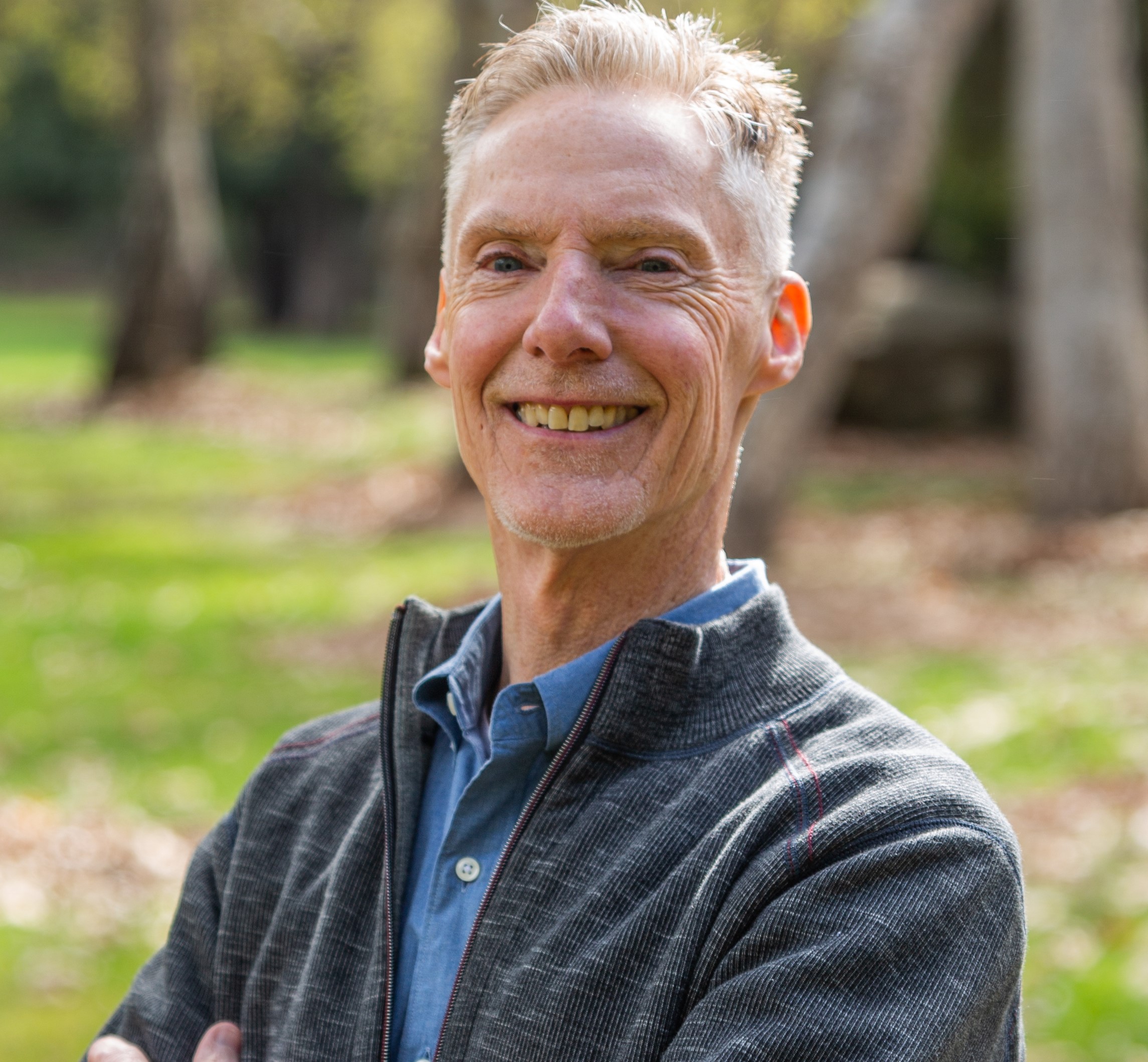
Connect with Don J. Rath on his website
Connect with Don J. Rath on Instagram
Connect with Don J. Rath on Linkedin
Don J. Rath holds an M.F.A. in Creative Writing from Queens University of Charlotte. A retired finance executive, he lives in the San Francisco Bay Area and writes short fiction and creative nonfiction, focusing on themes of identity, race, family, and LGBTQ+ experience. His work has been published in Musepaper, Hypnopomp, Scribes*MICRO*Fiction, Blood and Bourbon, Twelve Winters Journal, Barren Magazine, and Fiery Scribe Review. He is also a frequent contributor to the Southern Review of Books. His writing has been supported by the Bread Loaf Writer’s Conference (2023) and the Juniper Summer Writing Institute at UMass Amherst.

Please don’t forget
to support the writer!
Tell us your thoughts
Share this page
Visit Don
Choose Your Next Read
Page 4
POETRY
Pyrotechnics
Page 5
POETRY
Road to Recovery
Page 6
POETRY
What You Deserve
Page 7
POETRY
The Rebels
Page 8
FICTION
A Life Off-Kilter
Page 9
FICTION
A Chance Meeting
Page 10
FICTION
The Wolf’s Leap
Page 11
FICTION
Old Ways
Page 12
FICTION
Eyes Like Mine
Page 13
PICTURE PROMPT
The Fire Within
Page 14
Meet The Team
Page 15
Coming up Next in June 2026
 Manic Sylph Writes... Poetry & Thoughts by Mona Soorma
Share Your Thoughts