
SHORT STORY
SO YOU WANT TO WRITE A MOVIE
by Alan Swyer

After waiting close to forty minutes, Pete Lewis was finally led into the austere Beverly Hills office of a high-powered attorney named Molly Knapp, who eyed him coldly from behind her modern Swedish desk.
“Only because you mentioned Harry Weintraub,” the lawyer began, “have I squeezed you in. You have five minutes.”
“I’d like to pick your brain about a targeted hire.”
Molly Knapp winced. “Do you have any idea how much I bill per hour? Give me one reason I would consider having you to pick my brain.”
“Allison.”
“I-I beg your pardon,” uttered the surprised lawyer.
“Weintraub said your daughter’s an aspiring screenwriter in need of a mentor.”
Suddenly, Molly Knapp began to soften. “And?”
“Guess who teaches screenwriting at the Film Institute? Care to Google my credits?”
Molly Knapp gestured for Pete to sit. “Tell me what you mean by targeted hire.”
“A woman thinks she’s been recruited because of her credentials—”
“But?”
“It’s really because of a past affair with the newly appointed head of a government agency, whose contracts can be worth a fortune,” explained Pete.
Molly nodded knowingly. “So tell me,” she then said. “Got time to read the script Allison’s struggling with?”
In speaking of his work at the Film Institute, what Pete chose not to mention was that what initially was gratifying had become considerably less so in the years since he joined the faculty. Though flattered when first approached by Gerald Pickens — at a moment when he was in post-production on a film for HBO, with an opportunity at Showtime looming — Pete protested he had neither the time nor the patience for faculty meetings or administrative mumbo-jumbo.
“Your title will be Adjunct Professor,” countered Pickens. “A working professional who comes in for three hours one morning each week to sit around a table with nine or ten bright-eyed grad students.”
***
“So you want to write a movie?” Pete playfully asked on his first day of teaching, eliciting smiles, nods, and a giggle. “I can’t make you a writer,” he told the eager members of his class. “For that, you’d need a magician, not a mentor. But I believe I can make you a better writer. And I can help you think, function, and carry yourself like a professional screenwriter.”
The course, he announced, would be run as a workshop. All the students would participate not just in the creation of their own screenplays, but also in every other one that would ultimately be developed. Therefore, constructive criticism each step of the way was mandatory. Also, what was said and done within class was to remain within class. If someone were to write about drug use, or sex work, or anything outre, it was taboo to spread the word that a hypothetical Fred might have been a junkie, or a Sally might have turned tricks, or a George, Neil, or Bill might have been a serial killer or a Hell’s Angel.
Step one was for each student to learn how to “pitch.” To do so, everyone was assigned a film, which would then be pitched as if it were an original idea. To show the range of cinematic possibilities, Pete picked an array of films unfamiliar to the class: “Ninotchka,” “McCabe & Mrs. Miller,” “Le Feu Follet,” “His Girl Friday,” “The Organizer,” “Husbands,” “Yojimbo,” “La Guerre Est Finie,” “Out Of The Past,” and “Better Off Dead.” The goal was for the putative new concept to be pitched, with an emphasis on character, tone, and theme, followed by questions from the other students.
Simultaneously, every class member was to start conceiving an original notion that ultimately would be the basis for a script to be developed, then written, over the course of the academic year.
Only once an assigned film was successfully pitched and discussed could a new project be pitched. It would then be critiqued in the same way as the assigned film, followed by questions, suggestions, misgivings, and ideas from everyone in the workshop, including Pete. The key was that the go-ahead to write would be granted only when Pete was convinced that a class member was on the right track. The next step would be a written treatment of no less than ten pages, to be disseminated and discussed. Again, only when Pete gave the go-ahead could scripting commence.
Though not without an occasional hiccup or emotional meltdown, the first semester progressed to the point where once all the students were scripting, the first half of each get-together was focused on their work. Sometimes that involved a discussion of pages – or, during the second semester, a first or a second draft — that had been disseminated by email, while other times the focus would be either on problems class members were encountering, or on a topic that Pete chose to address. It was during those moments that Pete would expound about how character needed to be defined, not just through dialogue, but more importantly, by action. Or how it was crucial to remember that film was a visual medium. Pete also stressed repeatedly that where a story was set also needed to become a character, pointing out how New York informed films like “Naked City” and “Serpico,” just as LA permeated “The Big Sleep,” “Chinatown,” and “Shampoo.” After a short break, Pete would then introduce a guest: a screenwriter, director, editor, actor, producer, or studio exec he’d worked with. In addition to yielding insights and demystifying Hollywood, that enabled students to begin networking.
What surprised Pete even more than the enthusiasm of his students was how quickly class became a highlight of his week. Instead of seeming onerous or interfering with his regular work, he found himself looking forward to each session despite the painfully slow drive from Santa Monica to the eastern edge of Hollywood.
When his wife, Cindy, asked what his students were like, Pete smiled. “Either I got very lucky,” he said, “or there’s hope for the future.”
On those occasions when his schedule prevented him from holding class on campus, Pete would sometimes have the students meet him on-set or in the editing room. If that proved impossible, he would book a private room at Canter’s Deli for 11AM on Saturday so that he could hold class while treating everyone to brunch. Plus, he was happy to invite his students to the pre-airing screening of his film for HBO, which dealt with a Harlem playground basketball legend.
What began as a means of giving back also enabled Pete to receive. Above and beyond the satisfaction of seeing his class learn and grow, he discovered that addressing questions and problems kept him on his toes, forcing him not merely to come up with responses, but also to articulate answers to dilemmas he’d never fully considered or confronted.
***
Except for a faculty luncheon at the beginning of the Fall semester, plus a meeting each year before semester break, Pete, with a couple of exceptions, had little interaction with his teaching colleagues. The first exception was Gerald Pickens, with whom he often shot baskets on the weekend or grabbed an occasional lunch. The second was the CEO, a silver-haired woman named Helen Sloan, who turned out to be an ardent baseball fan and was delighted to learn that Pete had made a documentary about the Latinization of the sport. As for the other members of the screenwriting faculty, what Pete quickly gleaned was that their careers had either hit a wall, or had never quite materialized.
When, after multiple drafts, his first-year class’s scripts were at last completed, everyone in the workshop was elated. Beyond cliches like “professional” or “showing promise,” each screenplay – the majority of which were to some degree autobiographical – displayed an original voice. Even better, when the fellowships awarded to first-year students based on their work were announced, two of the three went to members of Pete’s class: one to Lisa Hernandez for her script about a migrant family, the other to Randy Moses, who wrote about street life in Compton.
***
Because the MFA Screenwriting Program at the Institute was for two years, with each group of students remaining with the same mentor for the entire time, year two began with a well-established dynamic and rapport.
Then came what Pete came to think of as “Second Year Who Am I?” Instead of drawing from their own lives, several class members attempted to come up with what they considered to be studio movies. Without the benefit of personal experience, they all too often began to work externally rather than internally, resulting in a desperate search for an appropriate structure.
Pete explained that despite the approach recommended in nearly every screenwriting manual — where the obligatory first step is structure, structure, structure — in a successful screenplay form invariably follows content. The story, he insisted, must dictate the way the story is told, not the other way around.
In need of a device that could yield clarity, Pete urged the students to ignore all screenwriting manual jargon. Forget about a “reverse” on every page with a 0, he insisted, as well as first- and second-act “crescendos,” and even the very notion of “structure.” Instead, he counseled: pick a character, then pretend that five or ten years have gone by since the incidents that took place during the course of the story. Have the character write a letter to someone else, so as to relate — and reflect upon — the events that took place, as well as the feelings about them that came up then, and continue to come up now.
The letter-writing proved to be a breakthrough. Freed from what was holding them back, the students saw their stories emerge in a way that felt natural, rather than forced, yielding a structure that was organic instead of imposed.
The letter-writing became a tool that Pete took to using not only in class but also in his own work, which that year was spent primarily on a documentary about an experimental program in San Diego that treated chronic criminality in much the same way as a chronic disease, emphasizing rehabilitation — especially literacy and job skills — over punishment.
Further validation of the work done in class came when two students who had initially struggled with structure went on to become winners of prestigious screenwriting honors. Frank Timoni, who focused on small-time hoods in New Jersey, won the coveted Academy Nicholls Award, and La Quita Holmes, writing about a Black high school principal, received the esteemed Page Award.
***
Pete’s third year began with an alert to the Screenwriting Department that instead of a two-year stint with the same mentor, there would henceforth be a juggling of students and faculty. Though the claim was that this would provide an opportunity for fellows to benefit from more than one mentor, Pete posed a question to Gerald Pickens. Could the success of his students, some of whom were getting attention from agents and managers, have fueled jealousy, thus leading to the change? The guilty shrug from Pickens confirmed his feeling.
Though the students that third year proved to be interesting, the end of the second semester brought a feeling that something was off, unrequited, unfulfilled. Pete would see new faces in September, rather than finishing the two-year journey that made the Institute special.
Compounding Pete’s uneasiness was an announcement from Helen Sloan that because the Institute had applied for a different kind of accreditation, significant changes would be forthcoming.
Over coffee with Gerald Pickens the next day, Pete couldn’t help but reference the way he felt. “Got the willies the same way I do?” he asked.
“I don’t think it’ll be a big deal,” responded Pickens, who then grew somber. “Mind if I ask you a personal question?”
“Fire away.”
“You thinking of hanging it up one of these days?”
“Teaching?” asked Pete. “Or the movie biz?”
Pickens sighed. “I haven’t sold a thing or even approached about a rewrite in close to three years. As far as my agent returning my calls…” Again, Pickens sighed. “Know how people say 60 is the new 40?”
“Yeah.”
“In our business, it’s more like 45 is the new 60 and 50 the new 70. You’re one of the few guys I know still working.”
“Which hopefully will continue,” said Pete. “I like what I do, plus I’m not interested in taking up golf.”
***
Despite Pickens’ contention that no big changes would come, the following week, an email announced that Leo Schreiber, whose credits were on films Pete found to be dull and pretentious, was being brought in, with a brand new title, to head the Screenwriting Department.
At the faculty luncheon that September, yet another serious change was announced. Henceforth, Helen Sloan informed the group, all classes were to be held on campus and at their designated times.
“Excuse me,” said Pete. “Isn’t it a little late in the game for those of us who happen to be working?”
Leo Schreiber, the screenwriter brought in to supersede Pickens, took it upon himself to respond. “Hopefully,” he stated, “you’ll find a way.”
To Pete’s chagrin, Helen made yet another announcement. “Though I’m reluctant to use the word mandatory, it would behoove the Institute, in our quest for the new accreditation, for all of you to start attending our monthly faculty meetings.”
Pete made no effort to hide his wince.
***
In the parking lot later, Pete was chatting with Pickens when Helen Sloan waved for him to approach.
“I’m aware the changes may be difficult,” she began.
“Difficult? Unlike some here, I have a career.”
“Which is why I value you. But I hope you’ll oblige.”
“For classes, I’ll try,” said Pete. “But for faculty meetings—”
“Because?”
“Are you aware of how tough it is to get here on a Thursday at 4? Or for me to get to Santa Monica afterwards?”
“How can I help?”
“My helicopter’s not working. Maybe you can send yours.”
Despite herself, Helen chuckled. “Even when you’re difficult, I enjoy you.”
Pete watched Helen head toward her Jaguar, then returned to where Pickens was standing.
“So what do we do,” asked Pickens, “if I’ve got a doctor’s appointment or you’re in production?”
“Since we’re on different days,” responded Pete, “maybe you can spell me on a Tuesday, and I can fill in for you on a Wednesday.”
“Think that’ll fly?”
“They said class must be on campus at the designated time,” replied Pete. “They didn’t say who had to run it.”
***
As the first day of classes neared, Pete had a meeting with his designated exec at Showtime, a woman named Charlotte Friedman, to discuss what he hoped would be his next project. In exploring how, even in the upper echelons of the corporate world, women were often exploited, he had come upon the term “targeted hire.” That, he explained to Charlotte, led him to interview three different women: an engineer, a scientist, and a statistician, who had been recruited because of past liaisons rather than professional accomplishments.
Though Charlotte was immediately intrigued, her interest skyrocketed when Pete mentioned his conversation with Molly Knapp.
“When it comes to representing women,” Charlotte stated, “she’s number one.”
“Which is why I went to her,” replied Pete.
“Even though she’s always said no to show biz, having her on board would be a promotional coup. Think she might sign on as a consultant?”
“Even better, how about we persuade her to be the prototype for the attorney character?”
Charlotte eyed Pete strangely. “Got something up your sleeve?”
“Could be.”
***
Fortuitously, Charlotte’s daughter Allison proved to be bright, effervescent, and eager. Better yet, her largely autobiographical screenplay, which dealt with a teenage girl’s awkward relationship with her high-powered-attorney single mother, had both heart and insight. Best of all, Pete’s weekly mentoring sessions with her, which took place at a Persian ice cream place on Westwood Boulevard, proved to be fun.
That was not the case, however, with his new group of screenwriting students. As before, he opened the first session by asking, “So you want to write a movie?” But instead of the usual smiles, nods, and a giggle or two, what he received, with three exceptions, were blank looks.
The exceptions – Minette Pieris from Sri Lanka, Astor Tevez from Brazil, and Rodney McCrae from New Jersey – were, and continued to be, in marked contrast to the other seven, who seemed to personify a sense of entitlement.
When Pete assigned the films to be pitched, Jonathon Schechter, who turned out to be the son of a powerful agent, cringed when assigned “A Face In The Crowd.” “You’re kidding,” he moaned. “A film in black & white?”
The grumbling continued when Toni Kriendler was given “Jules & Jim,” then increased when Anne McNeil was told that she would have to pitch “In A Lonely Place.”
“Enough!” said Pete. “If you’re unhappy, you’re welcome to leave.”
The members of the class begrudgingly bit their tongues.
***
“Remember how I’ve been lucky with my students?” Pete said to his wife over dinner that evening.
“Sure.”
“With a few exceptions, I’m afraid this group is different.”
“Give it time,” counseled Cindy. “Maybe things will improve.”
Improvement was not forthcoming. The next time Pete arrived at the Institute, Leo Schreiber intercepted him. “Seems we’ve got a problem,” Schreiber said. “You’ve been having guests without authorization.”
“Is that an accusation?” asked Pete.
“You could call it that.”
“Let’s take a walk.”
“Why?”
“Because I said so.”
Taking Schreiber by the arm, Pete led the way to a hallway lined with photos.
“Unauthorized?” asked Pete.
“That’s what I’ve been told.”
“Then how come all these photos of my guests were taken by the Institute’s photographer?”
Schreiber took a deep breath. “So tell me,” he then began, “is it fair that your students get to hear all kinds of people, but the other classes don’t?”
“What’s more appealing to guests,” Pete said, “to come in and sit around a table with ten students, then have me take ‘em to lunch? Or to miss lunch and face an assembly of forty or so?”
“But what about the other professors?” asked Schreiber.
“Don’t they have friends?”
***
A check to see how many members of his new class were the offspring show biz heavy hitters made Pete see how lucky he’d been in the past. Together they shared a smugness, knowing that talent, or the lack thereof, would play less of a role in launching their careers than it would for those without connections.
While Minette, Astor, and Rodney took their pitches of the assigned films seriously, Toni, Jonathon, Anne, and their kindred spirits copped attitudes ranging from arrogant to dyspeptic.
Reluctant to concede defeat, Pete tried to convince himself that real pitches would bring an improvement. That was somewhat the case with Jimmy Triarsi, whose mother was a high-powered manager, and a little less so with Lisa Booth, whose mom headed daytime programming for CBS. Then came Aaron Miller, son of a series showrunner, who tried to see above it, then groaned when told he would have to repeat in the weeks ahead. Toni Kriendler, the daughter of a music biz lawyer, seemed bitter when the consensus was that her pitch was half-baked. But while Pete guessed right in thinking that Astor, Rodney, and Minette would be well-prepared, the real surprise was Anne McNeil, whom he assumed was likely to be the bane of his academic existence. The daughter of a successful mother-father team of sitcom writers, she wowed everyone with a well thought-out tale of a teenage girl whose phobias are dismissed by wealthy parents too busy with their own careers and other pursuits to pay much attention. Anne eased some of Pete’s fears by becoming the first member of the class to get the green light to proceed to treatment.
***
Any expectation that Anne McNeil had become easier to deal with was shattered when Pete received a late night call from her. “Sorry to bother you,” she said. “But I’d like to work on a different story.”
“But you’ve already gotten the okay.”
“Pretty please? There’s something I’d really much rather write.”
“If it means that much,” Pete said with a sigh. “But there are people ahead of you, so you’ll have to wait your turn to pitch again.”
Three weeks later, Anne McNeil once more impressed the class and Pete with a harrowing tale about a teenage girl forced by her parents to go through deprogramming after running away to join an evangelical group. A short discussion followed, then again, she was granted a go-ahead to begin writing a treatment.
As class was ending the following Tuesday, Anne McNeil approached Pete sheepishly. “Will you hate me,” she began, “if I say that I’ve changed my mind again?”
“You want to go back to the first one?” Pete asked.
“No. I’ve come up with a better one.”
“Please tell me you’re kidding.”
“Is that a yes or a no?” asked Anne.
“It’s a no.”
***
When Pete pulled into the Institute parking lot the next week, a dour Leo Schreiber was waiting for him. “Tell me why,” grumbled Schreiber,“ you’ve gotta be so difficult.”
“Why do I think this is about my favorite new student?”
“Why can’t she write whatever the hell she wants?”
“Aside from the example she’d be setting, I thought this was supposed to prepare them to behave like pros.”
“Pros, my ass!” said Schreiber with a shrug. “Since most of ‘em will go nowhere anyway, why not let her write whatever the fuck she wants? Especially since her dad’s a major donor.”
Pete studied Schreiber for a moment, then shook his head. “I’m going to pretend I didn’t hear that.”
After keeping Anne McNeil waiting a week, Pete allowed her to pitch yet again, but only after making it clear that asking a fourth time would mean automatic expulsion.
The schism that Pete discerned in his class grew even greater once the scripting began. Not surprisingly, the three students who made the sessions worthwhile chose ambitious topics. For Rodney, that meant a tale about a neighborhood in Newark trying to retain its essence and soul when confronted by developers whose gentrification plans would likely force out the longtime residents. Minette’s story focused on an imperiled women’s shelter in a largely immigrant part of LA. Astor chose to write about an activist trying to sustain an under-financed youth center in a gang-ridden area. The others, to Pete’s chagrin, chose projects that to him were derivative, meretricious, and above all, dull. There was a poor man’s version of a Judd Apatow film, plus a cliched buddy comedy, a rom-com that seemed neither romantic nor comedic, and two banal action-adventure. Most discouraging of all was that Anne McNeil, whose original pitches were interesting, settled on a what she herself described as a “chick-flick weeper.”
Fortunately, Pete’s progress on what Showtime had taken to calling “The 14 Million Dollar Lay” was both challenging and rewarding for several reasons, including that it was his first ever project ever with a female protagonist.
An additional highlight was his continued mentoring of Allison Knapp, who never grew impatient about showing her script to the world — or at least to agents and producers — while it continued to grow richer and more multi-dimensional with every new draft.
***
As Pete drove into the Institute parking lot for the annual pre-holidays faculty get-together, he saw Gerald Pickens wave to him.
“Things any better between Schreiber and you?” Pickens asked as Pete emerged from his car.
“Right now it’s the Cold War,” Pete responded. “You pissed he was brought in over you?”
Pickens shrugged. “I need the bucks. And anyway, what could I do?”
“Lots,” replied Pete. “See other Black faces on the faculty?”
“Help myself by playing the race card?”
“You’d be helping everybody,” said Pete, drawing a reluctant nod.
Instead of grabbing a coffee with Pickens after the faculty meeting, Pete drove to Beverly Hills, where he braced himself before taking the elevator to Molly Knapp’s office.
“Level with me,” she said once he was led in. “Allison’s script, does it have any life?”
“You haven’t read it?” asked Pete.
“She hasn’t offered, so I haven’t asked.”
“Know what it’s about?”
Molly bit her lower lip. “You saying what I think you’re saying?”
“I know you’ve tried to stay away from the movie biz.”
“But could this put me on-screen?” Molly asked. When Pete nodded, Molly aced. “Does it have a chance?”
Again Pete nodded. “I’m pretty confident it can get her an agent.”
“From what she’s said,” Molly replied, “I think she’d rather have you produce it than some stranger, which is a nice way of saying hack. We talking about a big movie?”
“Meryl Streep or Nicole Kidman playing you?” Pete shook his head. “It’s probably an indie, or maybe something for HBO, Showtime, or maybe Netflix. But it’s bigger and better than anything you’ll see these days on Lifetime.”
Molly took a deep breath. “Since I can’t get in the way, what can I or we do to balance things?”
“The film I’m prepping for Showtime—”
“The targeted hire—”
“Come on-board as consultant or, even better, co-producer so that people can see and hear in interviews and how you fight the good fight.”
***
The next Tuesday, Leo Schreiber was waiting for Pete when he stepped out of the classroom. “Slick move,” he said. “You and Pickens covering for each other on days you can’t make it.”
“The rules say on campus at the designated time, not who has to be there,” replied Pete. “Maybe next time I’ll get a class of students who want to learn.”
“Don’t be so sure there’ll be a next time.”
Pete stared hard at Schreiber. “I beg your pardon?”
“Maybe you’re too old to be doing this.”
Pete smiled icily. “You just buried yourself.”
“Whoa,” uttered Schreiber. “I didn’t mean—”
“Not another word,” said Pete. “Not another fucking word!”
***
Two evenings later, Pete and Allison were waiting at an Ethiopian restaurant when Molly Knapp joined them.
“If this is to inform me I’m about to become a grandmother,” she began, “my only question is, who do I kill first?”
“Mom,” protested Allison.
“Enough with the suspense,” said Molly, who watched Pete gesture for Allison to speak.
“Showtime made an offer for my script,” Allison announced.
Molly threw her arms around her daughter, then kissed Pete on the cheek.
“Know what this means, don’t you?” asked Pete. “You may be part of two different films.”
Molly considered Pete’s statement, then turned to Allison. “I’m so proud of you.”
A moment later, Molly faced Pete. “I wish there were some way I could thank you.”
“There is.”
***
On a Friday at 1 pm, a grim Helen Sloan was waiting in a corner booth at West LA Italian restaurant when Pete approached.
“So, what should I ask first?” she said after an exchange of greetings, “How you know Molly Knapp? Or how did you persuade her to represent a man?”
“What if I say no persuasion was necessary?”
Helen frowned. “You know she prefers the court of public opinion to a court of law?”
“And?”
“That could do serious damage to the Institute.”
“Shouldn’t you have mentioned that to Schreiber?”
“He’d like to apologize.”
“For what he said to me, or for existing?”
“He’s not that bad,” said Helen.
“Compared to leukemia? The Screenwriting Department was better under Pickens.”
Helen sighed. “I can’t exactly turn back the clock.”
“So, what can you do?”
“I can offer you your position once again.”
“With meetings at a mandatory time and place? And questions about my guests? And Schreiber insisting I give special privileges to the next Anne McNeil?”
Helen shrugged. “I’m sorry about all that.”
“So am I. But that ship has sailed.”
“Then how about,” Helen said painfully, “a year’s salary?”
More pleasing than the money he received or giving the finger to Leo Schreiber was the announcement that Rodney and Minette had each won one of three fellowships granted to first-year screenwriting students.
As for teaching somewhere else, with both his own script and Allison’s headed for production, Pete recognized that the return to a classroom would have to wait.
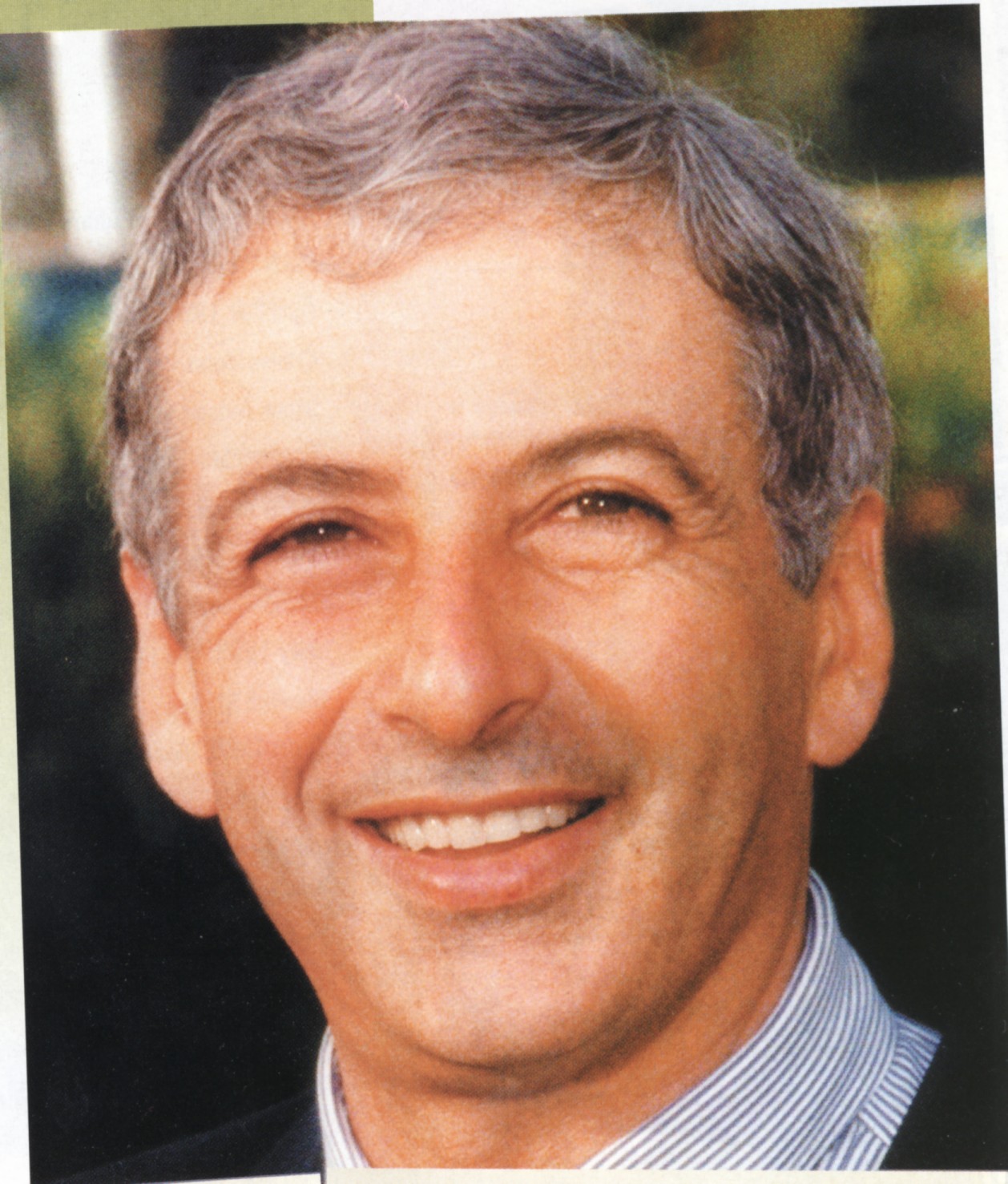
Connect with Alan Swyer on his website
Alan Swyer is an award-winning filmmaker whose recent documentaries have dealt with Eastern spirituality in the Western world, the criminal justice system, diabetes, boxing, and singer Billy Vera. In the realm of music, among his productions is an album of Ray Charles love songs. His novel ‘The Beard’ was recently published by Harvard Square Editions. His newest film is “When Houston Had The Blues.”

Please don’t forget
to support the writer!
Tell us your thoughts
Share this page
Visit Alan
Choose Your Next Read
Page 1
From The Lit eZine Desk
Page 2
POETRY
Feeding Monsters
Page 3
POETRY
Gradual Erosion
Page 4
POETRY
Floating Ghosts
Page 5
POETRY
Harder Now
Page 6
POETRY
A Future Returning
Page 7
POETRY
To Fill In The Blanks
Page 8
POETRY
Lost Poem
Page 9
POETRY
When You Feel You Need to Return Yourself Within 28 Days of Purchase
Page 10
POETRY
Of What Could Be
Page 11
POETRY
Living in the Conditional
Page 12
POETRY
Art/Love/Something Else
Page 13
POETRY
An Autumn Leaf
Page 14
POETRY
We Should Talk About This Obsession (I)
Page 15
FICTION
To Be Sickled
Page 16
FICTION
The Other
Page 17
FICTION
So You Want To Write A Movie
Page 18
FICTION
Vern
Page 19
FICTION
Home Smart Home
Page 20
FICTION
Ballpark Estimate
Page 21
INSIGHTS
On the Pursuit of Happiness
Page 22
INSIGHTS
How to Write a Best Seller
Page 23
INSIGHTS
Fishing For Words
Page 24
PICTURE PROMPT
Raindrops
Page 25
Meet The Team
Page 26
Coming up Next
 Manic Sylph Writes... Poetry & Thoughts by Mona Soorma
Share Your Thoughts