
SHORT STORY
THE LIGHTS OF ASVALEN
by Shafag Dadashova

In the heart of the Great Northern Plains, beyond the dense, frost-laden forests and shadowed mountain ridges, stood the ancient city of Asvalen. Encircled by towering walls of pale stone, the city was known across the land for its shimmering lights, an ethereal glow that blanketed the streets, courtyards, and rooftops each night. Every traveler who crossed the Northern paths had heard of Asvalen, not for its markets or the splendor of its architecture, but for the inexplicable radiance that surrounded it — a light that no moon or star could rival.
To those who had never seen it, Asvalen was a place of wonder, a jewel hidden in the frozen wilderness. But to those who lived within its walls, the lights carried a far more ominous meaning. The lights never dimmed, not even at the darkest hour. They cast an unwavering glow, soft and constant, yet there was no fire to fuel them, no lamps or torches to tend. The citizens of Asvalen moved through their streets by night as though in perpetual twilight, their faces bathed in pale radiance. No one spoke of the source of the light, but everyone knew of its price.
In the heart of the city, in the grand square beneath the Temple of Lumin, an old woman sat with her basket of woven charms, her hands frail yet quick, her eyes cloudy with age. She had witnessed more than a hundred summers in Asvalen, or so it was said, though no one dared to ask. They called her Atheia, and she had lived long enough to know the truth of the lights. It was on a winter’s evening when the outsider arrived. His name was Dara, and he had wandered from the south, seeking the famed city after hearing rumors of its beauty. Wrapped in thick furs, his face wind-burnt and weary, Dara stumbled through the city’s gates, drawn as much by curiosity as by the need for shelter from the biting cold. He expected a city bustling with life, laughter, and song, but Asvalen was strangely quiet. The people moved slowly, speaking in hushed tones, their faces etched with solemnity.
The lights enchanted Dara at first — he had never seen anything so beautiful, so unnatural — but soon unease crept in. The glow cast no warmth, and the air was heavy with a kind of stillness he could not explain. As Dara wandered deeper into the city, his gaze caught on Atheia, seated in her usual spot near the temple. There was something in her posture, in the way her hands moved without effort, that made him approach her.
“You are not from here,” she said before he could speak, her voice soft yet firm.
“No,” Dara replied, kneeling before her. “I came from the South, hoping to see the wonders of Asvalen. But the people… they seem afraid.
Why is that?” Atheia let out a long breath, her hands slowing as she worked the charm in her lap.
“They are not afraid of you, traveler. They are afraid of what you will see, of what you will ask.”
Dara frowned. “What do you mean?”
The old woman turned her milky eyes toward him, though she seemed to look through him rather than at him. “The lights, child. You marvel at them now, but they are not what you think. The lights do not come from the stars or the stones or the heavens. They come from within.”
“Within what?” Dara pressed, his curiosity piqued.
Atheia’s lips pressed into a thin line. She set down her work and gestured toward the towering Temple of Lumin. “If you truly wish to understand, you must go inside. But I warn you — what you find may be more than you can bear.”
Dara hesitated. The temple loomed before him, its white walls reflecting the city’s glow. There was something foreboding in its quiet majesty, a sense of purpose that both called to him and warned him away. But Dara was not one to shy from answers. He nodded his thanks to Atheia and made his way toward the temple’s doors. The moment he crossed the threshold, the air around him changed. It was colder inside, the silence deeper, almost oppressive. The light was dimmer here, softer, but still unnatural. It came from the walls, seeping through the very stone as though the temple itself was alive. At the far end of the hall stood an altar, and behind it, a figure robed in white. As Dara approached, the figure turned — a man, tall and stern, his face lined with age and duty.
“You seek answers,” the man said, his voice echoing in the empty space.
“I do,” Dara replied. “The lights… what are they?”
The priest, for that was what Dara assumed him to be, regarded him with a long, steady gaze. “The lights are our blessing and our curse. They are the gift of the heaven, a source of eternal light to guide our people, to protect them from the darkness of the world.”
“But how?” Dara asked. “How can such light exist without flame or fuel?”
The priest’s eyes darkened, and for a moment, Dara thought he saw a flicker of sorrow in the man’s expression. “The lights come from us, traveler. From the people of Asvalen.”
“I don’t understand.” The priest stepped aside, revealing a narrow stairway leading down into the earth.
“You will,” he said. “If you are willing to see the truth.”
Dara hesitated. A chill ran down his spine, but his desire for answers outweighed his fear. He descended the stairs, the priest following behind him, until they reached a vast chamber deep beneath the temple. The walls here were rough, unpolished, and the light was brighter, almost blinding. In the center of the chamber, Dara saw them — the source of the lights. There, in a circle of stone, stood a group of children. Boys and girls, no older than ten, their hands raised toward the ceiling, their faces serene, their bodies bathed in the same unnatural glow that filled the city. The light came from them, from their very skin, their eyes, their hair. It pulsed with their breath, growing and fading in time with their heartbeats.
“They are the Lights,” the priest said softly. “Chosen at birth to bear the weight of our city’s radiance. They give themselves so that Asvalen may live in peace and safety. Without them, the darkness would consume us all.”
Dara’s heart raced. “But… they are children. How can this be allowed? Why do they have to suffer for the city’s light?”
The priest’s face hardened. “They do not suffer. They are honored, revered. Their families are cared for, their names remembered for eternity. They are the guardians of Asvalen, the bearers of the light. Without them, we would be lost.”
Dara took a step back, horror creeping into his bones. “But they are still children,” he whispered. “Do they not have a choice?”
The priest’s gaze bore into him. “Do any of us have a choice? The light must come from somewhere, traveler. And we have chosen this path for the greater good.”
Dara’s mind raced. The beauty of the city, the wonder of the lights, it was all built on this — on the sacrifice of these innocent children. How could the people of Asvalen accept such a thing? How could they live with themselves, knowing that their comfort, their safety, came at such a cost?
“Take me back,” Dara said, his voice shaking. The priest nodded and led him back up the stairs, out of the temple, and into the pale glow of the city. The lights seemed colder now, harsher, as if they carried the weight of every child who had ever stood in that chamber. Dara left the temple in a daze, his mind swirling with questions, with anger, with sorrow. He wandered the streets, seeing the faces of the people — calm, serene, as if they knew nothing of the horrors beneath their feet. But they did know. They all knew. And yet they chose to live in the light, to accept the sacrifice. Atheia was still seated in the square, her hands working on another charm. She looked up as Dara approached, her expression unreadable.
“You saw them, didn’t you?” she asked quietly.
Dara nodded, unable to find the words.
“The light is beautiful, yes?” Atheia said. “But beauty always has a cost.”
“How can you live with it?” Dara asked, his voice breaking. “How can any of you live with it?”
Atheia’s hands stilled, and for a moment, she seemed much older, much wearier. “Because, traveler, we have no choice. The light is all we know. To reject it would mean to live in darkness, to let the cold and the night take us. And that is a fate far worse than what we ask of the children.”
Dara shook his head. “There must be another way.”
Atheia smiled sadly. “Perhaps. But if there is, we have yet to find it.”
Dara stood in silence for a long time, the weight of the truth pressing down on him. He had come to Asvalen seeking wonder, and he had found it — but at a price he could never have imagined. The lights of Asvalen were beautiful, yes, but they were also a reminder of the darkness that lived within all of them. The next morning, Dara left the city, the glow of the lights fading behind him as he returned to the cold, open plains. The people of Asvalen watched him go, their faces calm, their eyes serene. They would continue to live in the light, as they always had.
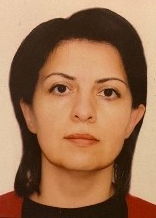
Connect with Shafag Dadashova on her website
Shafag Dadashova is an Assistant Professor at the University of ADA, Baku, Azerbaijan. She was a Research Fellow at the University of Oxford in the Centre for International Gender Studies in 2017. She studies cultural and gender identity in autobiographical writings.

Please don’t forget
to support the writer!
Tell us your thoughts
Share this page
Visit Shafag
Choose Your Next Read
Poetry:
Hard To See More Than A Stonecast
Poetry:
A Death In The Town
Poetry:
Untitled
Poetry:
Petal Poem
Fiction:
The Lights of Asvalen
Fiction:
Cloud People
Fiction:
The Gift
Fiction:
Thistle
Fiction:
The Cost of Visualization
Fiction:
CartoScan
Fiction:
A Time to Live
Fiction:
It’s the thought that counts
Insights:
Character Creation 101 – How to Write a Character with PTSD
Book Review:
In The Shadow of Rainbows
Book Review:
Honeysuckle Heat
Book Review:
Séduire: Serial Tales & Flash Fiction
Picture Prompt:
Eternal Puppeteer
 Manic Sylph Writes... Poetry & Thoughts by Mona Soorma
Share Your Thoughts