

PERSONAL ESSAY
WHEN YOU GET TIRED OF YOUR OWN NONSENSE
by Khaya Ronkainen

I distinctly remember the moment I knew I wanted to become a teacher—and also when I realised it wasn’t for me. It all began on my first day of school at six years old, soon to turn seven. When our teacher asked what we aspired to be when we grew up. I confidently declared I wanted to be a teacher. Two reasons shaped my response: first, nearly half of my classmates had already voiced the same aspiration, and second, it was a rare occasion when an adult seemed genuinely interested in what I had to say.
In my parents’ defence, they were hustling nine-to-five jobs and putting themselves through night schools to advance their careers. Mortgage was the cost of living a suburban life. Despite their financial constraints, my baby brother and I had a nanny cleverly disguised as a maid. The term “maid” wasn’t common in Black South African households; the title for this mother figure was simply “aunt.” The same was true for our multi-talented nanny, who came with valuable prior experience from working at a special needs school. She played a pivotal role in our upbringing.
At the end of that first week at school, our teacher provided individual feedback on a homework assignment. When it was my turn, she asked why I wanted to become a teacher. I couldn’t articulate it then, for fear of admitting I simply wanted to emulate her. Stumped for a response, I was met with a gentle suggestion,
“You know, there are other things you could do!”
Given my parents’ occupations—my father at the post office and my mother at the fashion retailer— what other things were there for me to do? Besides, they didn’t seem as happy as my class teacher. Then the teacher offered a frightening alternative,
“You could tell stories.”
Tell stories! Even as a bewildered six-year-old, I knew there was no way I could talk all day. I preferred to write than talk. In my young mind, the word “tell” meant “talk.” Looking back on that day, my class teacher’s suggestion was most likely influenced by what I had written for homework. In very short and simple sentences, I explained why I have three names and two surnames.
***
Graduating high school was both the best and the worst of times. As a teenager, the thrill of earning my diploma alongside cherished friends and committing to the same university was undoubtedly a highlight. Yet, the uncertainty loomed large as I grappled with selecting a career path while feeling like everyone else had it all figured out.
My indecision didn’t stem from nowhere. When I was about ten years old, motivated by her dissatisfaction with the retail industry and the apartheid laws that were increasingly forcing the Black population out of urban areas, my mother bought a smallholding previously owned by a German farmer. That led to our family’s relocation to the countryside. The small farm, complete with a general store, became her new livelihood. That’s where I learned my first business lessons, helping out in the store during school holidays to earn pocket money. If I fancied a change of scene, my mother would send me to my aunt in the city who ran a fish and chip shop. I would also help out there and make extra cash. Raised by female entrepreneurs, I was steeped in the ethos of business from a young age.
Living in the countryside and devoid of television entertainment, I read a lot of books. I also took it upon myself to be the correspondent for my boarding school-bound older siblings and cousins, updating them about the peculiarities of rural life. But it was taking turns retelling Xhosa folktales, a newly found pastime, that lit up our rural household with excitement in the evenings. Stories played a big part in shaping my worldview as I grew up.
So, here I was armed with a matriculation certificate, entrepreneurial flair, a love for storytelling, and dizzy with decision-making. My mother gave me a lot of freedom, as long as I didn’t pursue entrepreneurship. My father spoke in metaphors and made allusions to crafting my own story. Neither my mother’s admonition against business ownership nor my father’s cryptic encouragement gave me any direction. One of my uncles suggested I study teaching. Of course, he was a teacher himself, but his manner of expression was a deterrent,
“Don’t be like your mother who left a paying job for this risky pursuit!”
Despite familial input, I was pulled towards a career mirroring my mother’s seemingly unconventional choices. I opted for a business degree and thereafter ventured into the world of business. I was embarking on a journey to chart my own course, distinct from—but inspired by—the entrepreneurial spirit that shaped my upbringing.
***
Moving to Finland presented me with a clear path, teaching. It was a chance to reinvent myself, as I felt compelled to diverge from my previous career trajectory, despite the accumulated experience. Writing was not a consideration at first, but a nagging. While climbing the corporate ladder, I had neglected my passion for storytelling. Colleagues would offer their unsolicited advice following emails I wrote to arrange a meeting with a client or apologise to an unhappy customer,
“You should be a writer. You’re so good with words.”
Amidst learning Finnish, I pursued internships at different schools to finally satisfy my childhood desire. As a newcomer, people were often interested in learning about my experience as a Black woman in apartheid South Africa. I could have said I was only a child then. But recounting my childhood had an appeal; it revived my love for stories.
Although the journey into teaching was going to be arduous, I enrolled in an English Philology programme at a university a hundred and twenty-five kilometres away from our small town. I felt most alive and enjoyed immersing myself in words again. Freezing winter evenings spent waiting for a bus back home became more tolerable as I excavated the roots of words, made sense of old texts, played with language, and eagerly sought feedback. In the middle of one lecture, our literature professor made a statement that caught us off guard,
“You could become a poet.”
I couldn’t help but burst into laughter, because this was a joke, right? Given her cheery disposition, I figured she was on something strong. Still, her comment was not a random occurrence. I had just delivered a presentation on Keats’ poem, To Autumn, which was followed by a spirited discussion and recitation. It was when I realised she wasn’t joking that I responded,
“No way. Do you realise how difficult it is to write poetry?”
Initially, I dismissed my lecturer’s recommendation for poetry. I wanted to keep my emotions neatly organised not to feel them, and I knew poetry would upend all that. Instead, I amused myself with writing short stories about Finnish oddities, claiming it was my way to deal with culture shock. I couldn’t bring myself to talk about the loneliness of finding myself being the only Black person at a dinner table, on a bus, in a classroom, at a theatre, the list went on. Because I came here willingly; I followed love. Thus, writing re-emerged as a clear path out of necessity, a way to fill the yawning void or else risk courting a mental asylum.
But I had to earn a living and stop dilly-dallying around. I dived into another study program on early childhood development and supporting special needs pupils. During a conversation with my sister, she explicitly stated,
“I just don’t see you as a teacher.”
Me neither! I didn’t see myself as a teacher. Reflecting on my sister’s insight, a seasoned teacher herself, I accepted teaching wasn’t my destined path. My time as a teaching assistant revealed the immense responsibility of shaping young minds for a better future. I knew without a doubt I wasn’t cut out for it. That realisation saved me time I would have wasted pursuing a teaching qualification.
***
After my stint in the Finnish education sector, I longed for the dynamic business world and reminisced about the entrepreneurial freedom my mother enjoyed. At fifty, I hot flushed myself back to the classroom to study full time. Reflecting on the rebellious decision I made at seventeen, in defiance of my uncle’s recommendation, I dropped out of business school midway. My grades reflected my lack of passion for accounting and applied statistics. Hence, I chose a hands-on approach and worked my way up, inspired by my mother’s success without a business degree.
However, this time, I didn’t have any false illusions. I knew my business skills needed an upgrade. Because when I studied marketing many years ago, there was no such thing as digital marketing. Faced with scepticism from former colleagues, I made the daring move. The millennials and zoomers welcomed me with a mix of amusement and curiosity after I had clarified that I wasn’t there to mother anyone. It was thrilling to learn new approaches or gain a fresh perspective on things I already knew, which were now decorated with new business terminology. I was also in awe of the intelligence of this young generation. They brought their tech expertise and agility; I brought experience. At the end, I left with the prestigious document, a boosted ego and imagined job titles.
Amidst envisioned titles and chasing elusive job opportunities, I found myself confronted with the harsh reality. There were no humans at the end of the line to receive my dispatched resume. Only artificially intelligent robots that focused on the past instead of what I can do today and tomorrow, given a chance. The relentless pursuit of employment felt akin to riding a dizzying merry-go-round and with a deep dark hole forever present, if I lost my grip. Reclaiming my independence felt like waiting for clipped wings to regrow before I could take off. As I pondered the efforts of my parents, lessons from my caregivers, guidance of my teachers, and endorsements from those who believed in me, I felt like a failure for not living up to my potential. Because we are biased to look at the external cause of our suffering, I ruminated about all the things that make me unemployable, such as age and race, that are beyond my control. But what were the odds of passing the initial recruitment phase with algorithmic screening?
A sequence of springs brought about a transformation, alas, only for the flowers. Because I kept flipping the same coin, expecting a different outcome, even though there were only two equally likely possibilities. I was never afraid of failure, but here I was waiting for someone to anoint me, instead of creating work for myself. As someone once said, transformation can only begin when we finally tire of our nonsense. Indeed, I grew tired of flipping the coin. I scrutinised it instead and discovered that what I’d been searching for was already in my possession.
My sister was right, after all. I’m not one for complex theories and rigid rules but practical application and innovation. It took me long though to realise my childhood aspiration was never about standing in front of a classroom but to impart knowledge. I call myself a writer and entrepreneur but I’m also an educator. Sharing my passion with the world is what gets me up in the mornings. The act of crafting narratives and shifting perspectives lights up my brain. Likewise, supporting others as they share and embrace their own stories brings me immense joy.
Connect with Khaya on her website
Connect with Khaya on Instagram
Buy her books
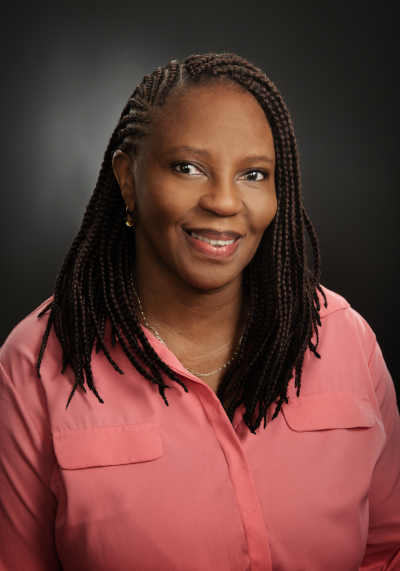
Editorial team member Khaya Ronkainen is a writer, poet and creative professional. Her most recent poetry collection is The Sheltering. Learn more about her work at www.khayaronkainen.fi or find her on Instagram @khaya.ronkainen.

Please don’t forget
to support the writer!
Tell us your thoughts
Share this page
Visit Khaya
Choose Your Next Read
Author Spotlight:
Poetry by Suzanna C. de Baca
Author Spotlight:
Flash Fiction by Suzanna C. de Baca
Author Spotlight
Interview: Suzanna C. de Baca
Poetry:
The Dancer
Poetry:
Patriarchs Anonymous
Poetry:
Agamond’s Lament
Poetry:
Lost Souls at Night
Poetry:
Gaia
Poetry:
Until Morning
Poetry:
Even The Poor Have Stars To Guide Them
Poetry:
Summer, Ballgown, Symphony
Poetry:
Snow Poured Out…
Poetry:
Cri Du Coeur
Poetry:
With
Poetry:
Two Points
Poetry:
Ladybird
Poetry:
Essence
Poetry:
Tan-Renga
Poetry:
They Came For Mangoes
Poetry:
Duplicity
Poetry:
My New Nose
Fiction:
Two Brothers
Fiction:
The Gate Lodge
Fiction:
Family Connections
Fiction:
A Deceitful Dream
Fiction:
Her Partial Presence
Fiction:
Our Last Night as a Fancy Couple
Insights:
When You Get Tired of Your Own Nonsense
Insights:
Lessons For Life
A Writer’s Life:
Elizabeth Barrett Browning
Picture Prompt:
The Untold Story
 Manic Sylph Writes... Poetry & Thoughts by Mona Soorma
Share Your Thoughts