

LITERARY FICTION
OUR LAST NIGHT AS A FANCY COUPLE
by Constantine Ballard

There stands my love as I surreptitiously walk into the room. She sees me through our bathroom mirror and smiles the smile I’ve known and kissed for sixteen years and says, “Hi sweetie.”
Silently, I watch as she continues to brush her long blonde hair in that elegant way after acknowledging my presence. There she is: proof that love is real. Sara is wearing a black dress, pink heels, her lips are ruby red, and her heart is made of gold.
She’s forty-two; I’m fifty-three and have felt blessed to stand beside her and watch her grow into the successful marketing expert and beautiful woman that she is today. I then break my silence to wonder aloud, “You were this little girl when we first met, and now…”
Sara slightly pursed her lips through the mirror, dropped her shoulders, tilted her head with a worrisome look; and with every breath that fills her lungs, there is hope and a sense of life’s illimitable possibilities exhaled into my darkness. Sara always had that calming, self-assured way about her. (It was I who turned out not to be good enough.)
“O, you look so serious,” she says.
Calling her “sweetie” those early years came naturally, for there was no one sweeter. We met when we were young and felt new to each other for a very long time and walked the streets of New York City, San Francisco, Nashville, Detroit, and our beloved Mackinac Island hand-in-hand.
She was just out of college when we met back in March of ‘03, working for the local music magazine. I was a former musician, who had spent seven years on the road, now working at the Detroit Institute of Arts as a special events manager. I was already in my mid-thirties, destined for bachelorhood when we met.
Two years later, in between the rifled musket shots of a Civil War re-enactment along the Straits of Mackinaw, I went down on one knee and proposed. She sat on a bench, teary-eyed with excitement, and smiled her beautiful smile and said yes.
Ah, we were once young and in love. We married in February of ’05 and left Detroit for Phoenix in January of ‘08 when Sara was recruited by Arizona State University.
After nearly two decades together, I stood in our bathroom (at the very spot I would beg for her to listen three months later) and wondered why she chose me, a depressant. I quietly watched as she applied her lipstick.
“You chose me. Why?” I’d ask. No answer ever came. She would just smile her little girl smile and say, “Yes, Sonny, I chose you,” with the same confidence she exhibited the first night we met when she approached me at the Majestic Theatre and asked if I worked at the DIA.
Five years later, Sara and I would drive across the country with our 2-year-old son, Mick, fastened in his baby seat watching cartoons.
It was exciting and scary. We were at the dawn of a new life together in Arizona. When we moved there, we didn’t know anyone. We were the Three Musketeers, until baby Emma arrived two years later and made us four, like the Beatles.
It’s springtime, early April of 2021. While Sara gets ready for our first night out since the pandemic, I remind her that there’s no need for any makeup. I try telling her that the earth smiles when the sun hits her Irish skin and what I see forever is a flower in bloom, but she won’t hear it.
The stunning glance (O how her blue-eyes shone!) and the half-smile, maybe half-believing my words. (When you’re privy to everyday miracles, as I had been for so long, time moves by at lightning speed and those incredible life moments keep slipping away through the hourglass of time.)
Our Cockapoo, named after the great Detroit Tigers and Cincinnati Reds baseball manager, walked into the bathroom, straight to Sara. I stepped closer and kneeled to scratch Sparky behind his ears.
“These are the good ole days, aren’t they?” I say. “Us with the kids and Sparky represents this time, doesn’t he? These really are the good ole days that we’ll remember and think about and wish to return to when we’re old.” (When we’re old, I thought.)
She turns around, arms to her side while holding her brush and asks with the look of genuine concern, “What’s wrong, sweetie?” (Truth be told, we called each sweetie back then.) “Why are you talking like this? Did something happen today?”
“No, I was just thinking, that’s all.”
“About the book you’re working on again?”
“Yeah, sorry, I’ll stop.”
“Sonny, remember what we talked about. You said you were going to work on being more present. Remember?” with the tilt of her head, the grace of her skin.
I stand up to look into her eyes and say, “I married my dream girl,” still thunderstruck, still in awe.
“Yeah, right,” she said with a disbelieving smile (her soft rosy lips a dream to me now), “thank you, sweetie,” as if to happily concede while I lean against the wall in the navy-blue suit she picked out for me before the pandemic.
We drove the Tesla downtown. I never got comfortable driving it. During the twenty-minute ride, we talked about our amazing kids and about all we had accomplished since our move to Arizona. We revelled in how well things seemed to go.
“We’re so lucky, Sonny, they’re so good.”
“I know, sweetie.”
I put on our favorite track of Jason Isbell’s recently released “Reunions” album and we talked more about our lives during the pandemic. Sara mentioned how close we had become as a family – the four of us staying at her parents’ condo in Ahwatukee while our house was being renovated. It had been a whirlwind of work, worry and joy, but always together, always Sara by my side.
“I know that you don’t like living at my parents’ condo, Sonny, but we’ll be back in our house before you know it.”
“As long as I wake up every morning and see you and the kids, I’m fine, sweetie.”
“No you’re not, but we’ll be back soon,” and she squeezed my hand and gave me the look of love and we were happy on this night.
The reassuring hand-squeezes were a lifetime ago. The look of love, the laughter, the joy, the excitement of being and going everywhere together, whether it was catching a movie at the Detroit Film Theatre or having breakfast at a little heavenly morning spot in Ferndale or watching a local band at The Lager House, Smalls or The Majestic. It feels like a dream to me now. The past is gone.
I glanced over at Sara sitting shotgun with golden hair, looking whimsically out the window as we take I-10 to Phoenix. “Can you believe that Mickey will be driving soon?” she said.
“No, I can’t.” I had already felt time slipping away more intensely and somehow wanted to slow it down, at least for a little while. “Wasn’t it just yesterday,” I said, “when Mickey was dressed as a pirate for Halloween and neither one of us could keep from crying?” Tears flooded both of our eyes when we watched him ride away from us in a pulled wagon that first Halloween in Arizona.
“Every thirty seconds, he would turn around and wave,” remembered Sara. “I wish you wouldn’t think so much about that, Sonny. It makes you so sad. Didn’t you once write that time changes everything?” remembering an old lyric that I wrote in my early twenties during my ill-advised rock band days. I placed my right hand on Sara’s leg as I steered with my left. She placed her hand over mine. I was the luckiest man in the world on this night.
Walking into a bar or down the street or attending a fund-raising event or going anywhere with Sara, believing with Sara, dreaming my dreams with her – there was joy, there was worry, and there was love that brought no rain. I felt that our time was now, written in the stars, listening to Jason Isbell and the 400 Unit, believing every word, note, and beat – I’m looking at Sara and feeling the same way about her as I did when we were young. She just always felt like home to me. This, I thought as the song “Dreamsicle” played on and I glanced at m-love’s hands. I see her wedding ring and I know that the sum of all her parts is a picture of grace and beauty and spirit before me.
Driving downtown to an event didn’t seem like a seminal moment in my life. It wasn’t like the births of our children or leaving Michigan and buying our house in Chandler or when she said yes in Mackinaw City in between the musket shots – it was another moment shared, like so many blessed moments during our time.
We drove down Central Avenue and approached the Phoenix Art Museum, which shares the same courtyard as the Phoenix Theater, where everything was happening. It was billed as the first event in Phoenix since the end of the pandemic.
We parked the Tesla under a single tree branch in the theater parking lot. The lot was already full. We held hands and walked into the event and checked in at the RSVP table. No matter where we went, no matter where we’d go, Sara always made me feel like the king of Arizona. This night was no different.
The event was held outside in the courtyard on a perfect springtime night, just before the inevitable summer heatwave would kick in. There were about 300 guests: an influential gathering of Phoenix attorneys, C-level executives, physicians, and entrepreneurs. And then there was our neighbor, Roland, a finance guy, already loaded, rambunctious, a Golf war veteran. Roland is probably my closest friend in Arizona.
“Sonny, Sara!” I hear his all-too familiar voice calling our names right after we checked in.
“Roland,” I said with genuine surprise, “I didn’t know you were gonna be here!”
“Neither did I, Sonny. Two tickets showed up in the mail and here we are.”
His wife, Laura, was sitting at their table by herself. She waved at us while Roland brought back their drinks.
The night before, Roland and I were talking in his driveway while he was cleaning out his minivan from the last family trip to Flagstaff. The night before, he had seen a re-run of a television show that my old band appeared on in the early nineties. This sent Roland over the top, and he kept bombarding me with questions about all the touring and bar gigs we played long before I met Sara.
“How about that, Sara,” he said with a hearty laugh, “while your future husband was playing in bars, I had my nose in the dirt in Iraq.” Roland never really cared about what he said or who heard him saying it. One of the many aspects of my former life that I miss are the conversations we’d have, usually when both of us went out to sneak a smoke after dinner. We’d start talking about everything from baseball to music to the state of our country. After about an hour, I’d walk back into the house and Sara would shine her eyes at me and smile like a dove and ask if Roland and I had figured out the world problems yet.
We then hear our names being called in the opposite direction, “Sonny, Sara!” This time it’s a familiar, husky, female voice that we haven’t heard since we moved to Phoenix thirteen years earlier. It was Sara’s friend, Liberty, with her husband, Carl. They were a young dynamic couple, both in their mid-thirties, who married right after college. Sara met Liberty during her time at ASU.
Liberty resembled an older, blonde-haired Miley Cyrus. She was gregarious, bright, confident, attractive, and curiously a staunch Republican. I always imagined her hosting a right-wing talk show. Her husband Carl was a tenacious, good-hearted block who, stunned by Liberty’s beauty and brains while they were both attending UCLA, fell head over heels. They saw eye-to-eye on everything and truly made a power couple in Phoenix. Liberty was teaching at a community college and Carl had just started his own tech company.
“What are you doing, here?! O my God!” shouted Liberty with Carl standing tall and dark-haired behind him.
Sara and Liberty embraced in a hug, while Carl and I shook hands. Carl is a Los Angeles Angels fan, so our bond is the shared disappointment of a baseball team that looks amazing on paper, holds great promise in spring, yet never fails to disappoint over the summer.
“How is it that the Angels have both Ohtani and Trout in their lineup and they still can’t win the Pennant?” Carl complains, “You tell me, Sonny? The last time the Angels won a World Series was 2002.”
“I hear ya, pal, but try 1984 on for size.”
We see our friends Chuck and Janet, who invited us to the event, standing by our table talking with another couple. After a few steps we hear, “O my gosh, it’s the Carrolls!” shouts a middle-aged man and his wife. It took me a moment and then I realized it was Mike and Peggy, whose son played Little League with Mickey. When I noticed it was our old friends, a sad, warm feeling came over me. We were five years older now, and I would always treasure those incredible, magical afternoons and nights at Nazomi Park in Chandler.
We reminisced feverishly about our Little League days when the DJ from the stage interrupted Miles Davis’ “So What” to announce into the microphone, “Please take your seats as we’ll begin the program.”
“Sara, we have to get together.”
“Yes, let’s the four of us pick a happy hour date,” said Mike.
Sara and I loved the idea because we loved Mike and Peggy. We ended our conversation with the promise to get together soon and walked over to our table with Sara radiantly leading the way.
“The Carrolls are here!” shouted Chuck. “Sonny, how are you, man?” We gave each other a hug and fell right into a conversation we began about a month ago. Chuck was the first friend I made in Arizona and is the kind of guy that anyone would like his or her child to be like – smart, good-hearted, a successful partner at his law firm, and another suffering baseball fan with his Twins.
“Sonny, man, it doesn’t look like your Tigers will be any better this year. How you doing with your fantasy team?”
“Are you kidding me?” Sara joyfully interjects. “Sonny’s a terrible manager, and he only picks Tigers and Diamondbacks, no matter how bad they’re doing.”
We laughed and sat down with Chuck and Janet and had a wonderful dinner. I do not remember what we ate or even what the conversation was like. I just remember Sara and how we moved in and out of topics and held no prejudices. We made no conclusions about politics or anything. It was a celebratory night of making our way through a bad situation as a community. The proverbial light at the end of the tunnel felt near. We could see it.
Arizona Senator Michael Hernandez and his girlfriend also sat at our table. He played golf with Chuck. The Senator is a young dark-haired Mexican American whose left-wing beliefs are considered too radical by his state’s Democratic party, but doesn’t care, and asks me about the medical research institute that I raise money for. I introduce him to Sara and extend an invitation for a tour.
I remember the exhilaration we felt by all the familiar faces and the revisiting of our early days in Arizona. I remember thinking that there wasn’t a place in the world I could possibly feel uncomfortable in, as long as I had Sara by my side.
My God, we were a glorious couple with our whole lives ahead of us. I type this now at Lola’s coffee house in downtown Phoenix, two years after we signed the divorce papers, still trying to come to terms with all I have lost and this new life chapter, this new beginning without her.
So, it is true that when the eaves branch breaks from the weight of the world, there will be no warning, no yield, nothing. The last time Sara told me she loved me, I do not remember. Our time together becomes more remote in my mind with each passing day and the sound of her voice, the sound of the woman I once knew inside and out and shared a life with fades into oblivion as a distant bird sings, and this night, our last as a fancy couple becomes nothing more than another faraway memory I dare to re-live over and over until the distant bird ends her melodic song and I someday grow young again.
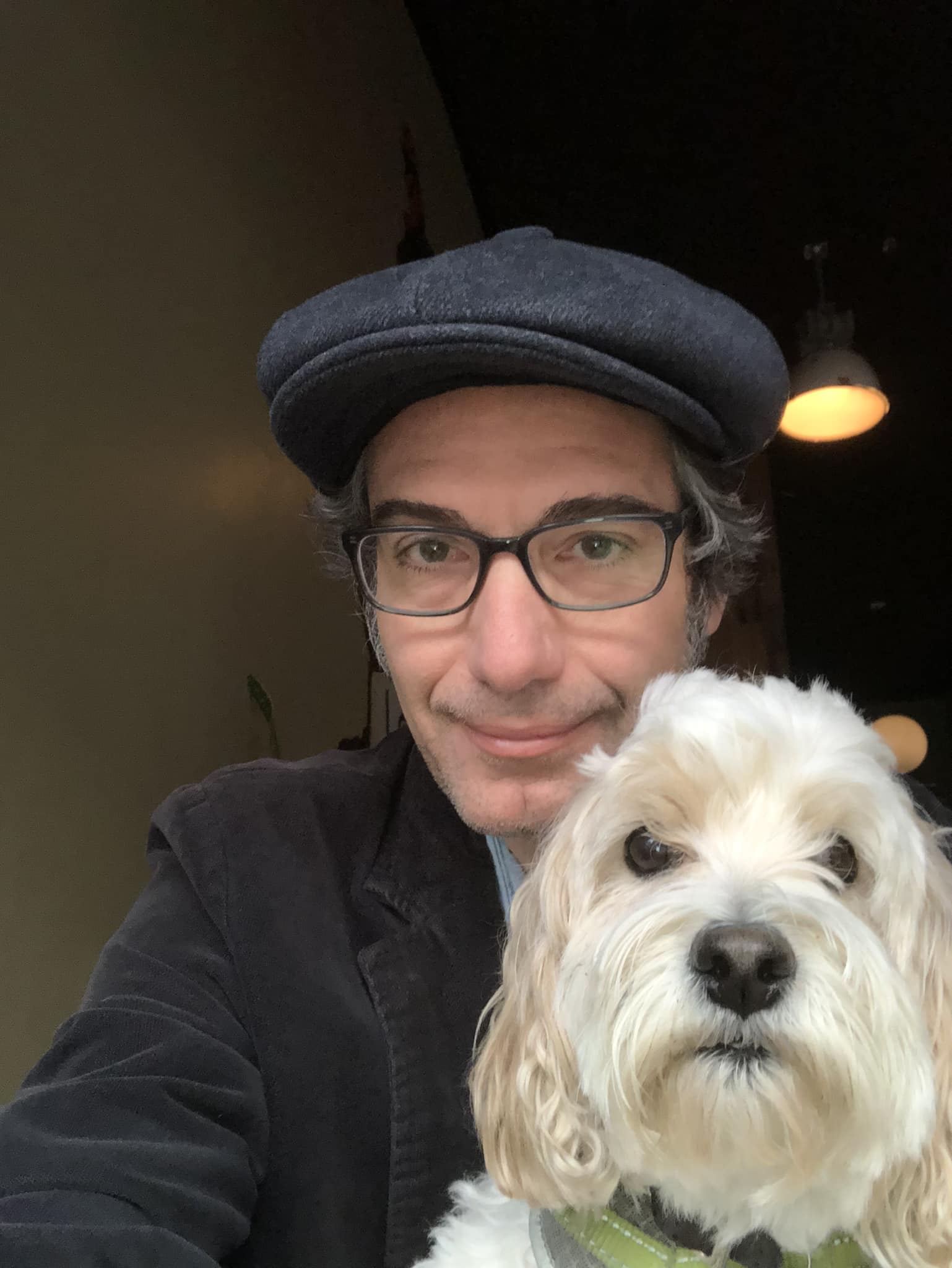
Connect with Constantine at ballard.dean@gmail.com
Constantine Ballard was born in Detroit, Michigan, during the riotous year of 1967. He lives in Phoenix, Arizona, and works as a fund-raiser for a non-profit medical research institute. In January 2008, Constantine moved to Phoenix, Arizona. His novel “Move” is a Generation X road novel written from 1997 to 2000. “Little Jesus at the Plate” is a novel he finished between 2000 and 2014. In 2023, he finished writing his third book, “Merit’s Drugstore Thieves,” about a Detroit country rock and roll band. All three manuscripts are unpublished. However, his other writings appear in publications such as Bouillabaisse, Spitball Magazine, Slow Trains, and most recently, Glue Gun.

Please don’t forget
to support the writer!
Tell us your thoughts
Share this page
Choose Your Next Read
Author Spotlight:
Poetry by Suzanna C. de Baca
Author Spotlight:
Flash Fiction by Suzanna C. de Baca
Author Spotlight
Interview: Suzanna C. de Baca
Poetry:
The Dancer
Poetry:
Patriarchs Anonymous
Poetry:
Agamond’s Lament
Poetry:
Lost Souls at Night
Poetry:
Gaia
Poetry:
Until Morning
Poetry:
Even The Poor Have Stars To Guide Them
Poetry:
Summer, Ballgown, Symphony
Poetry:
Snow Poured Out…
Poetry:
Cri Du Coeur
Poetry:
With
Poetry:
Two Points
Poetry:
Ladybird
Poetry:
Essence
Poetry:
Tan-Renga
Poetry:
They Came For Mangoes
Poetry:
Duplicity
Poetry:
My New Nose
Fiction:
Two Brothers
Fiction:
The Gate Lodge
Fiction:
Family Connections
Fiction:
A Deceitful Dream
Fiction:
Her Partial Presence
Fiction:
Our Last Night as a Fancy Couple
Insights:
When You Get Tired of Your Own Nonsense
Insights:
Lessons For Life
A Writer’s Life:
Elizabeth Barrett Browning
Picture Prompt:
The Untold Story
 Manic Sylph Writes... Poetry & Thoughts by Mona Soorma
Share Your Thoughts